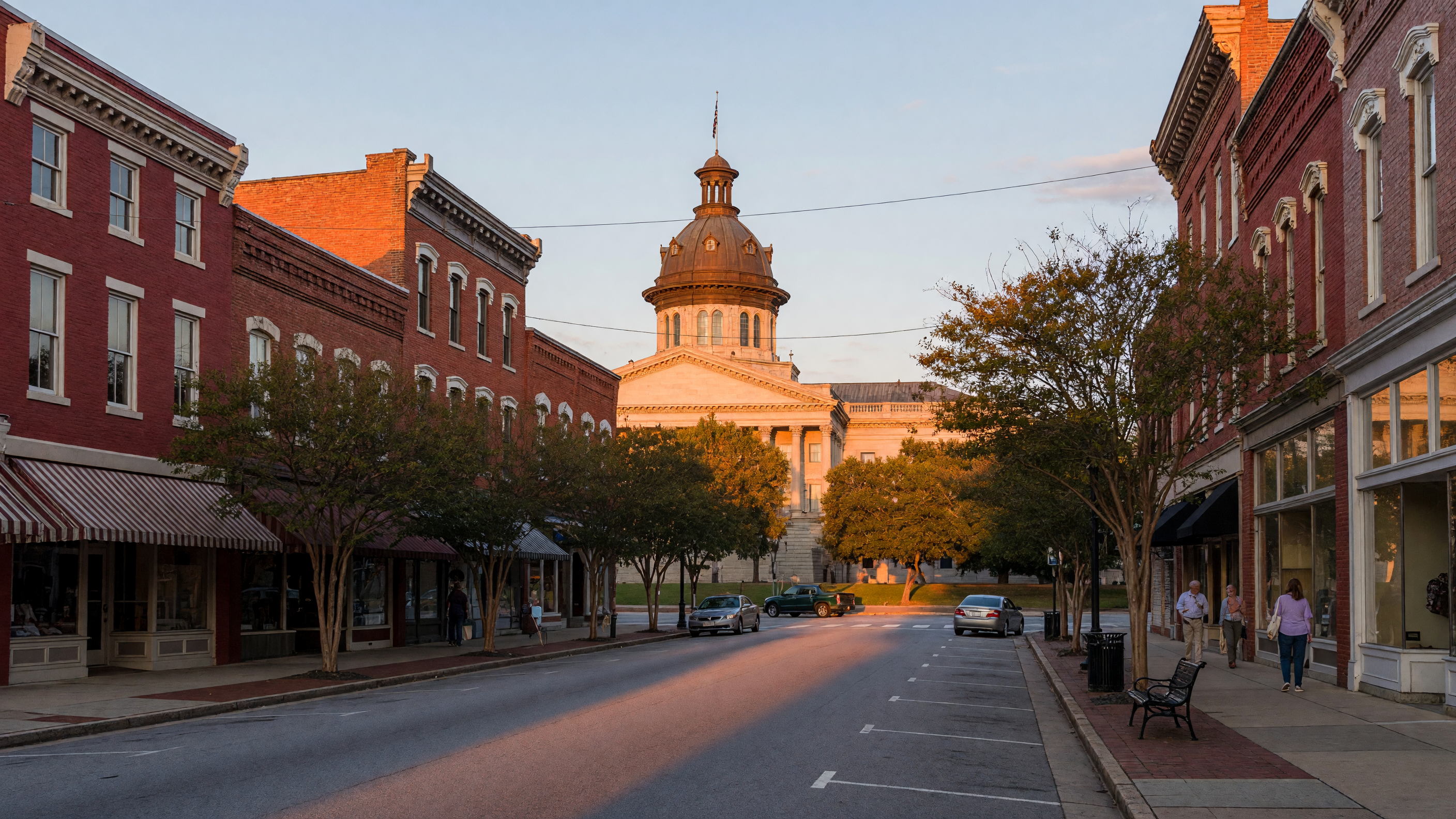
Columbia
Living in Columbia, SC — the city everyone's heard of, but few really know
Columbia is the state capital and the urban anchor of the Midlands. Population around 137,000 in the city proper, with more than 830,000 in the metro area. It is home to the University of South Carolina, a growing downtown, and historic neighborhoods that most people moving to the area do not even know to look for.
Current Market Snapshot — June 2026
Consolidated MLS
| Area | Median Price (YTD) | Homes Sold | Days on Market | Active Inventory |
|---|---|---|---|---|
| City of Columbia (N to I-20) | $218,750 | 264 | 47 | 135 |
| Columbia South | $289,000 | 203 | 35 | 84 |
| Cayce / West Cola / Airport | $255,000 | 563 | 47 | 241 |
| Rural Richland County | $259,900 | 89 | 84 | 72 |
Urban Living That Still Feels Southern
Columbia gives you something the suburbs cannot: walkable neighborhoods, historic homes with real character, and a downtown that has genuinely come back to life over the past decade. Main Street has transformed from a place people left at 5:00 PM into a corridor of apartments, restaurants, and the weekly Soda City Market that draws thousands every Saturday morning.
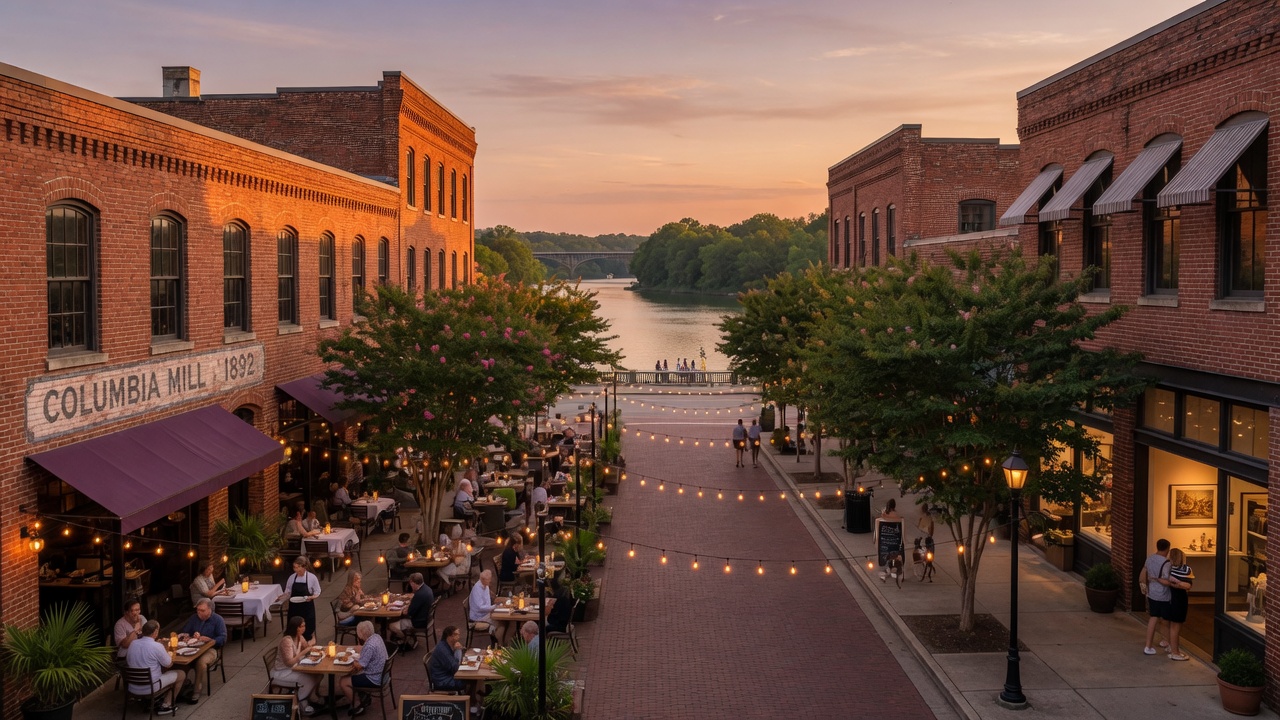
The Vista is the city's dining and entertainment district — converted brick warehouses now housing some of the best restaurants in the state, art galleries, and a nightlife scene that ranges from quiet cocktail bars to live music venues. It sits between the State House and the Congaree River, which also means riverfront trails, kayaking, and outdoor space within walking distance.
The cost of living in Columbia runs well below the national average, and the housing stock varies enormously — from condos and townhomes near campus to expansive historic homes in Shandon and Heathwood. Your money genuinely goes further here than in most capital cities in the Southeast.
~137,000
City Population
Metro area: 830K+
$250K – $500K
Typical Home Price
Wide range by neighborhood
Below avg
Cost of Living
Lower than most SE capitals
Richland One/Two
School District
Varies by neighborhood
The Historic Districts Worth Knowing
Shandon
Columbia's first planned suburb, dating to the 1890s. Queen Anne, Craftsman, and Colonial Revival homes on tree-lined streets near Five Points and Devine Street. Walkable, charming, and full of people who are deeply invested in their neighborhood. This is where a lot of buyers who want urban character end up.
Heathwood
Established in 1914 with strict architectural guidelines that still show. Colonial Revivals, Tudors, Cape Cods, and mid-century homes on large, landscaped lots. This is the kind of neighborhood where people stay for decades. Higher price point, but homes here hold their value well.
Hollywood-Rose Hill
Bungalows and kit homes from the 1910s and 1920s, with a strong neighborhood association and a loyal resident base. More approachable on price than Shandon or Heathwood, and still close to everything downtown.
Elmwood Park
A historic district just north of downtown with early 20th-century homes, a strong sense of community, and easy access to both Main Street and the BullStreet development. Popular with buyers who want to be close to the action without paying Shandon prices.
Dining, Culture, and College Energy
The Vista is where Columbia goes out. The restaurants range from white-tablecloth Southern cuisine to casual taco spots, and the concentration of them in a walkable few blocks means you can actually park once and spend an evening. Motor Supply Co., Cola's, Blue Marlin, and Terra are among the staples that people drive in from the suburbs for.
Five Points is the other pole — more casual, a little louder, and heavily influenced by USC. Bars, boutiques, late-night food, and college game-day energy that spills across the whole district. It is not for everyone, but the people who love it really love it.
For buyers who want to be near campus — whether you work at the university or just like the energy — the neighborhoods around USC range from student-heavy rentals to quiet blocks where faculty and staff have lived for years. The key is knowing which streets lean which way, and that is not something you can figure out from a listing.
Who Columbia Is Right For
Columbia works best for buyers who want the energy of a real city. People who want to walk to dinner, who value historic architecture over square footage, who want to be near the university or the State House or the river. It is the right choice for people who do not want to trade urban life for a bigger yard.
It also works well for buyers relocating from larger cities who are used to a certain density and do not want to go full suburban. If you are coming from Atlanta, Charlotte, or DC and you want a smaller city that still has a pulse, Columbia delivers without the price tag.
One thing to know: the school situation varies by neighborhood. Some historic districts feed into schools that parents are happy with. Others require more research. Jill can walk you through which neighborhoods match your priorities, including school quality.
Questions People Ask About Columbia
Is downtown Columbia a good fit for families, or mostly singles/young professionals?
Both, depending on the neighborhood. Some areas are walkable and urban, others are quieter, historic, and very family-friendly.
How does living in Columbia itself compare to the surrounding towns?
More density, more nightlife and culture, and shorter commutes if you work downtown. The surrounding towns trade some of that energy for more space and quiet.
What should I know about Fort Jackson and the military presence in Columbia?
Fort Jackson is a major part of the local economy and community, and I work regularly with military families relocating in or out of the area.

Ready to see if Columbia is the right fit?
Let's talk about what matters to you, and I'll tell you what I know.